How Project Conditions Determine the Best Trenchless Pipe Repair Method
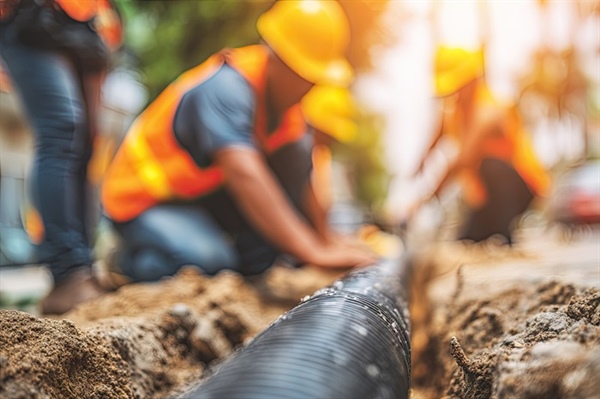
Choosing the right trenchless pipe repair method depends heavily on the specific conditions of each project. Factors such as soil stability, pipe size, pipe material, and the surrounding underground environment all play a direct role in determining whether techniques like lining, bursting, or other trenchless approaches are technically feasible. Because trenchless repairs are designed to restore pipelines with minimal excavation, understanding the physical constraints of the job site is one of the most critical steps in selecting the safest and most effective solution.
In many cases, the best repair method is not simply a matter of preference, but of engineering compatibility. Advanced Trenchless Solutions recognizes that trenchless technologies such as pipe lining must be matched carefully to real-world conditions. The following sections explore how soil composition influences method selection, why pipe diameter and material can limit certain repairs, when structural failure rules out lining, how nearby utilities shape feasibility, and why professional inspections are necessary before any trenchless decision is made.
How Soil Composition Determines the Best Trenchless Pipe Repair Method
Soil composition is one of the most influential factors in trenchless repair selection because the surrounding ground directly affects both installation forces and long-term pipe performance. Dense clay soils, for example, tend to hold their shape and provide stable support, which often makes trenchless rehabilitation methods more predictable. In contrast, sandy or loose granular soils may shift during installation, increasing the risk of voids forming around the repaired pipe. These voids can compromise structural stability, particularly in projects where ground movement is already a concern.
Different trenchless techniques interact with soil in different ways. Pipe replacement methods require the surrounding soil to withstand displacement forces without collapsing. If soils are highly unstable or saturated, the excavation-free nature of trenchless work becomes more complex because the ground may not maintain integrity during the process. This is why project planning often begins with geotechnical understanding—soil type, moisture content, and compaction levels all influence which approach is technically sound.
In many trenchless rehabilitation cases, methods such as pipe lining can perform well in stable soils because the host pipe remains in place and the surrounding ground does not need to be displaced. However, even lining depends on soil conditions indirectly, since external loads and soil pressure affect how much structural support the renewed pipe must provide.
Why Pipe Diameter and Material Limit Certain Trenchless Repair Options
Pipe diameter is a defining constraint in trenchless repair because many rehabilitation systems are engineered for specific size ranges. Small-diameter service lines may not accommodate certain installation equipment, while very large-diameter municipal pipes may require specialized materials and curing processes. The internal space available determines whether lining systems can be inserted, expanded, or cured properly without restricting flow capacity beyond acceptable engineering limits.
Pipe material also plays a major role. Cast iron, vitrified clay, PVC, and concrete all respond differently to rehabilitation techniques. Some older materials may have irregular interiors, joints, or surface degradation that affect bonding and installation reliability. For example, brittle pipe materials may fracture during replacement-based methods, while flexible plastics may deform under forces that would not affect rigid concrete pipes.
When diameter and material conditions align with replacement needs, techniques such as pipe bursting may be viable because the existing pipe is fractured outward and replaced with a new line. However, pipe bursting is not feasible in every diameter range or for every material type, making accurate evaluation essential before selecting the method.
When Structural Pipe Failure Makes Lining Impossible
Trenchless lining is widely used because it restores pipelines without excavation, but it is not always an option. Structural pipe failure reaches a point where the host pipe can no longer serve as a stable conduit for lining installation. If a pipe has fully collapsed, experienced severe deformation, or lost large sections of wall integrity, there may be insufficient internal pathway to insert or cure a lining system.
Lining depends on the existing pipe maintaining enough shape to act as a mold for the new liner. When failure is advanced, the liner may not seat correctly, leading to wrinkles, voids, or incomplete curing. These defects reduce hydraulic efficiency and structural performance, meaning the repair would not meet engineering standards for long-term rehabilitation.
In these situations, replacement-oriented trenchless approaches are often required instead of rehabilitation. Structural assessment is therefore a key step in determining whether lining is appropriate or whether full pipe renewal is necessary due to irreversible host pipe damage.
How Surrounding Utilities Influence Trenchless Repair Feasibility
The underground environment is rarely isolated, especially in urban or developed areas. Water mains, gas lines, electrical conduits, telecommunications ducts, and storm drainage networks often run parallel or intersect with damaged pipelines. The presence of surrounding utilities can significantly restrict trenchless repair options because some methods involve ground displacement or pipe expansion that could disturb adjacent infrastructure.
Pipe replacement methods require careful clearance analysis. If nearby utilities are too close, the forces involved may create unacceptable risk of damaging critical lines. Even lining methods, which are generally less disruptive, still require access points and staging areas that must account for surrounding utility corridors. Engineering feasibility is determined by mapping utility locations and evaluating how repair processes interact with them.
This is why trenchless planning often involves utility coordination, subsurface imaging, and strict adherence to clearance standards. Selecting the wrong method in utility-dense environments can lead to service disruptions, safety hazards, or regulatory violations.
Why Professional Inspections Are Essential Before Choosing a Trenchless Solution
Professional inspections provide the technical evidence needed to select the correct trenchless repair method. Without inspection data, decisions may be based on incomplete assumptions about pipe condition, soil environment, or structural integrity. Modern trenchless evaluation commonly uses CCTV camera surveys, sonar profiling, and condition grading to identify defects such as cracks, corrosion, root intrusion, joint separation, or collapse.
Inspections also determine whether rehabilitation is sufficient or whether replacement is unavoidable. A pipe that appears repairable from the surface may have hidden structural instability, while another pipe with localized damage may be well-suited for lining. The difference can only be confirmed through qualified assessment, which reduces the likelihood of selecting an ineffective method.
Advanced Trenchless Solutions provides inspection-driven trenchless expertise, and readers can learn more about their services through Advanced Trenchless Solutions. Professional evaluation ensures that trenchless decisions are grounded in verified conditions, improving both performance outcomes and long-term infrastructure reliability.
How Advanced Trenchless Solutions Supports the Right Repair Choice
Trenchless repair selection requires more than choosing a technology—it requires understanding project conditions, pipe limitations, soil behavior, and underground constraints. Advanced Trenchless Solutions brings experience in evaluating these factors to help match the most appropriate repair method to each situation, whether the need involves lining, bursting, or full pipe renewal.
With a focus on technical assessment and proven trenchless practices, Advanced Trenchless Solutions serves Wisconsin Rapids, WI and surrounding communities with specialized pipeline rehabilitation services. Their team works with property owners and municipalities to address soil challenges, pipe structural concerns, and complex utility environments while minimizing disruption.
If you need expert guidance on trenchless repair decisions, contact Advanced Trenchless Solutions at 844-513-4106 or visit their office at 1138 6th Street South, Wisconsin Rapids, WI 54494. To reach their team directly, use their contact us page to schedule an inspection or consultation.